The winners of the 2025 Alberta Beer Awards were announced last night. This 8th edition of the competition brought an interesting mixture of familiar names and surprises. Here is my take on this year’s results.
The big winners this year are undoubtedly Blindman, Cabin and Ol’ Beautiful. Cabin and Ol’ Beautiful each won five medals and tied for Brewery of the Year. Blindman picked up four medals plus a bronze in Best of Show. Followers of ABAs will know that Cabin and Blindman have made frequent appearances on the top of the medal podium. Ol’ Beautiful has won its share of medals over the years but really bumped things up a step this year. It seems a somewhat fitting outcome given the fire last year that destroyed their taproom.
Best of Show went to Sea Change for its Nevermore, a barrel-aged imperial stout from its Maiden Voyage Series, which is a series of limited edition, one-off barrel-aged beer. The BOS silver went to Snake Lake for its Ice Cutter Vanilla Latte Stout. As mentioned, Blindman won BOS bronze for Dwarf Cherry Fruited Saison, a five-time (three gold) medal winner at the awards. New Brewery of the Year went to Brewsmith out of Calgary. The full list of winners is reproduced below.
Sixty-two breweries entered 420 beer into this year’s competition. This is down both for number of breweries (from 72 last year) and entries (502). I am not surprised by this slight decline. It has been a rough couple years and I imagine breweries are cutting back on things like competition entries.
Overall I continue to be impressed at how well spread out the medal winners are in this competition. Forty-five different breweries won a medal (including 22 with multiple medals). Five breweries won medals for the first time – Bitter Sisters, Brewsmith, BSB Brewing, Burn Block Social Club and Nodding Donkey. (Don’t ask me why four of them start with “b”.)
But, as usual, there were also a lot of familiar names. Fifteen beer that won medal last year won again this year. The entire non-alcoholic category repeated, with Tool Shed’s Zero People Skills and Zero Red Rage and Big Rock’s Pacer Haze Pale Ale all medalling again. In fact, Tool Shed can still brag that a beer with “red rage” in the name has won a medal at every single iteration of the competition. that is 8 years in a row – pretty impressive.
Other notable returnees include Cabin Sunshine Rain, Medicine Hat Gentleman’s Stout and Blindman 24-2 Stock Ale as well as the aforementioned Sour Dwarf Cherry Fruited Saison.
Looking at the regional breakdown, Calgary once again asserted its dominance at the awards, picking up 35 medals (11 gold), which is a whopping 45% of all medals available. Edmonton came a distant second this year with 20 medals (7 gold). Among the smaller centres, Central Alberta led with 10 medals (3 gold), followed by the South (8 medals, 3 gold) and the North with five (two gold).
I have been involved in this competition since the beginning. And the primary trend I see across all the years is an improvement in quality overall. I remember the first year well. Most of the beer were fine, but there were a noted number of infected, oxidized entries and beer not generally fit for commercial sale. To be frank that is gone. Not to say there aren’t still a few beer with some noticeable flaws, but the evolution of the industry has meant that substandard beer simply doesn’t sell and a brewery that produces substandard beer simply won’t make it.
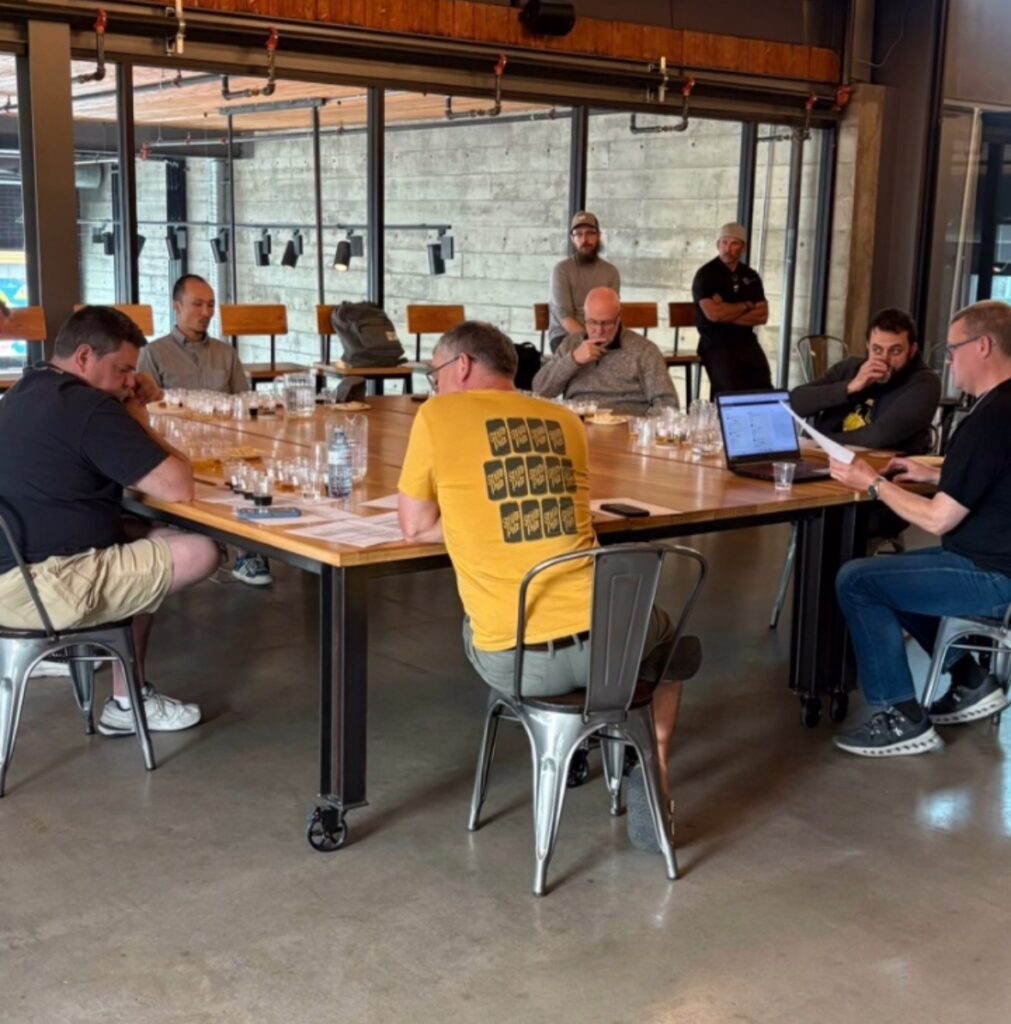
I took a look at the scores from this year’s competition (I may do a full analysis later). The median consensus score (the average of the judges’ scores) was 34 (out of 50) which under BJCP scoring is considered “Very Good: generally within style parameters, some minor flaws”. 33 entries received a score of 40 or higher, which judges reserve for beer they consider to be excellent or exceptional. In contrast, Only 8 entries scored under 25, which is usually an indication of serious flaws or contamination.
I didn’t judge any of the beer myself this year, as I moved to the back room in preparation to take over as Head Judge next year. But from discussions with the judges there was a widespread opinion that most of the beer were clean and well-brewed. Judges commented that often points were deducted for stylistic reasons – a pale ale not being hoppy enough, or a stout lacking complexity. This is an important observation. Breweries don’t always brew to make the “best” of a certain style. They make beer that they think their customers will like and purchase. That is the point. But it means that dialing back the hops a bit might be an intentional choice, not a flaw.
Judges have to evaluate to some criteria, and so style guidelines are an important component of competitions. But judging scores need to be seen in context and interpreted accordingly. Not winning a medal is not the same as brewing a bad beer. It could be a wonderful quaff in the tap room. It just doesn’t hit that criteria needed in competitions.
On the flipside, brewers should pay attention to what judges’ comments on scoresheets. Judges have refined palates and extensive beer knowledge, meaning they can provide you feedback the average consumer cannot. If you take that feedback seriously, you can tweak your recipe or process to make your beer better.
In all, once again I think the ABAs have demonstrated that Alberta has a vibrant craft beer industry with breweries making excellent, even world-class, beer. I think a challenge going forward is to find a way to encourage the breweries that didn’t enter this year to give it a shot again next year. The more breweries that enter makes the ABAs a better snapshot of the state of the industry.

Leave a Reply